Deep Dive
CARDS & MECHANICS
A full breakdown of how Rug'd cards function — from stats and costs to zone flow, board pressure, and the tactical depth behind every match.
Playtest access is opening soon. Drop your email to get notified first.
Contents
CARD TYPES
Rug'd has four card types. Each occupies a distinct mechanical role — understanding what each type does and when to use it is the foundation of deckbuilding.
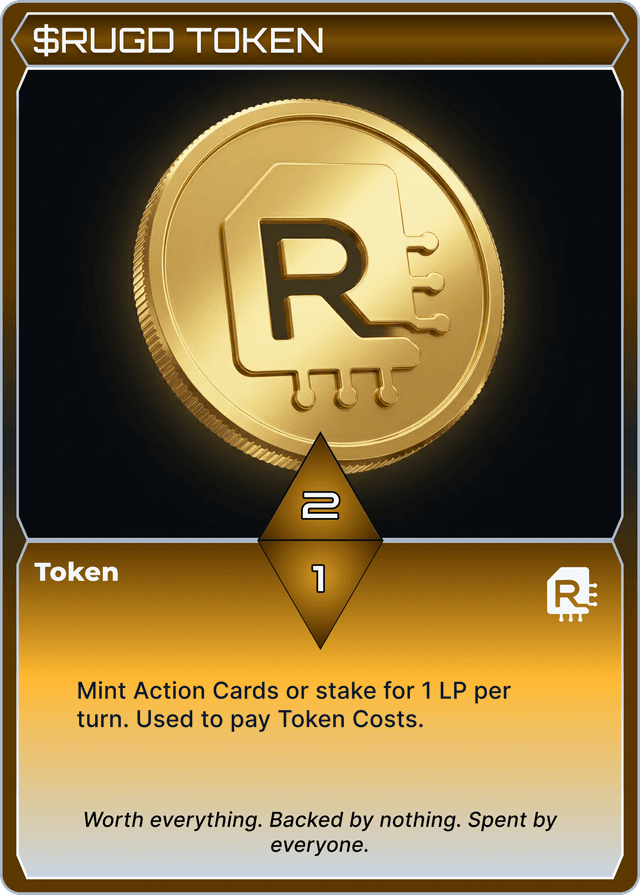
Token Cards
Every deck runs exactly 25 Token Cards. They never enter your hand — they start in the Generator Zone and must be bridged into your Wallet by paying 2 LP each. Once in your Wallet, they pay the Token Cost of Action Cards or can be staked to generate LP. Tokens are mechanically identical; rarity is visual only.
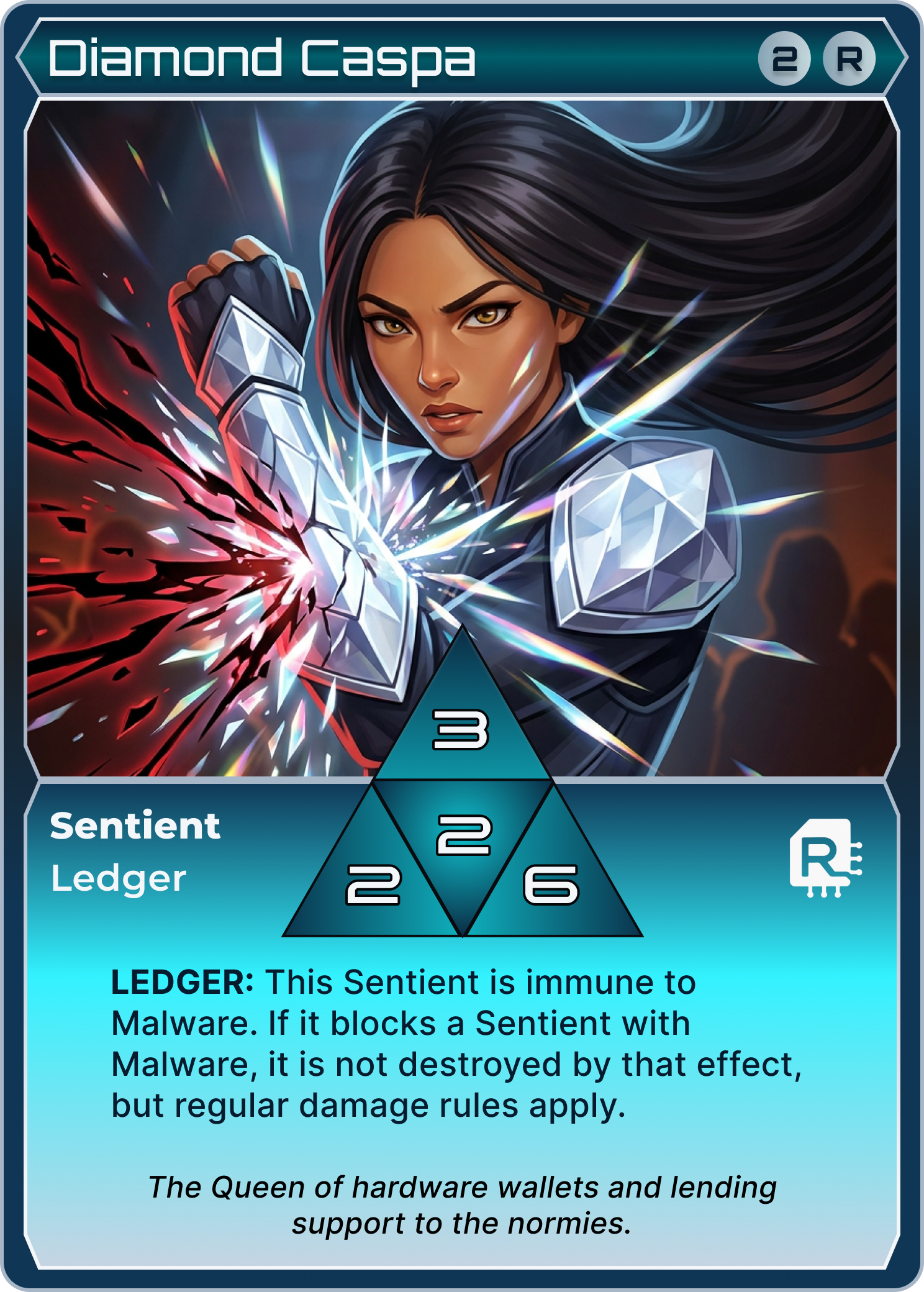
Sentients
Sentients are your primary combatants. They are minted into your Wallet, then deployed to the Arena where they can attack, defend, and use abilities. Each Sentient has ATK, DEF, Stake Value, Deploy Cost, and Token Cost stats. They are the primary tool for draining your opponent's Capital and controlling the board.
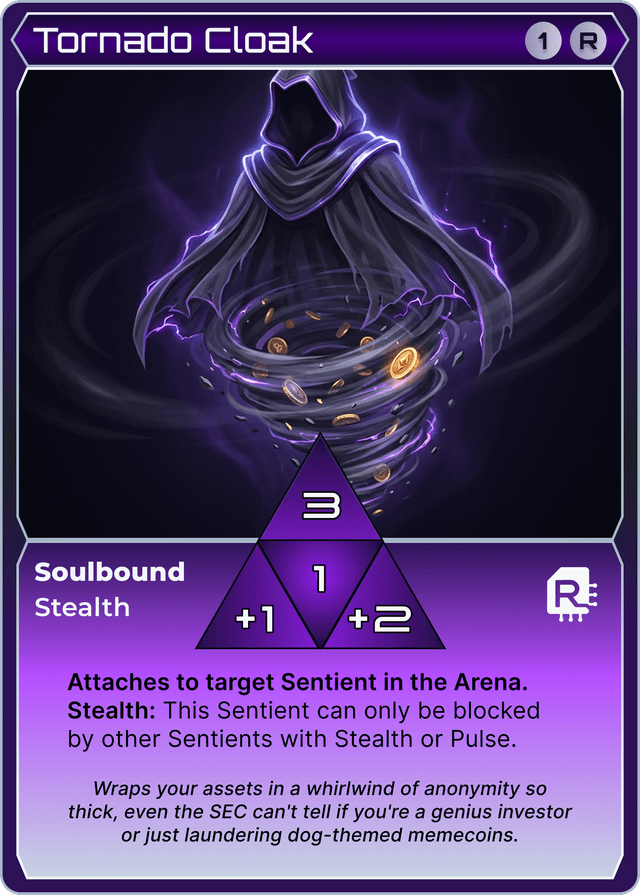
Soulbounds
Soulbounds attach permanently to Sentients, granting stat bonuses and abilities. Multiple Soulbounds can stack on a single Sentient unless restricted by card text. When the Sentient they're attached to is destroyed, the Soulbound goes with it — unless the Sentient has the Salvage ability, which returns attached Soulbounds to the Wallet instead.
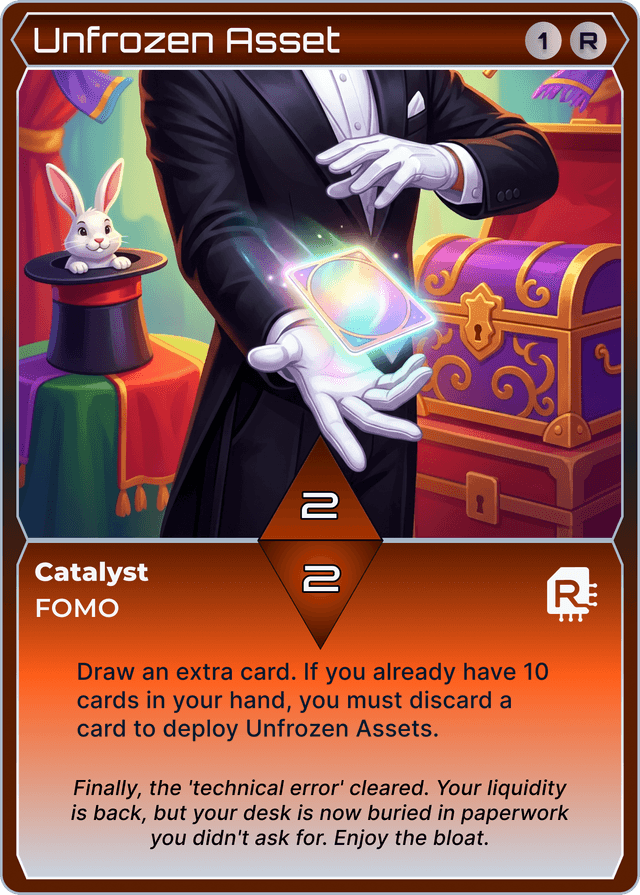
Catalysts
Catalysts are one-time effect cards that reshape the game state. Their timing is defined by their Classification — some resolve on your turn only, others respond to opponent plays. After resolving, Catalysts go to the 404 Zone unless otherwise stated. They can also be bridged to the Staking Zone to generate LP instead of being played.
STATS & COSTS
Every Action Card carries a stat cluster that defines its power and cost. Understanding each stat is how to read a card's true value.
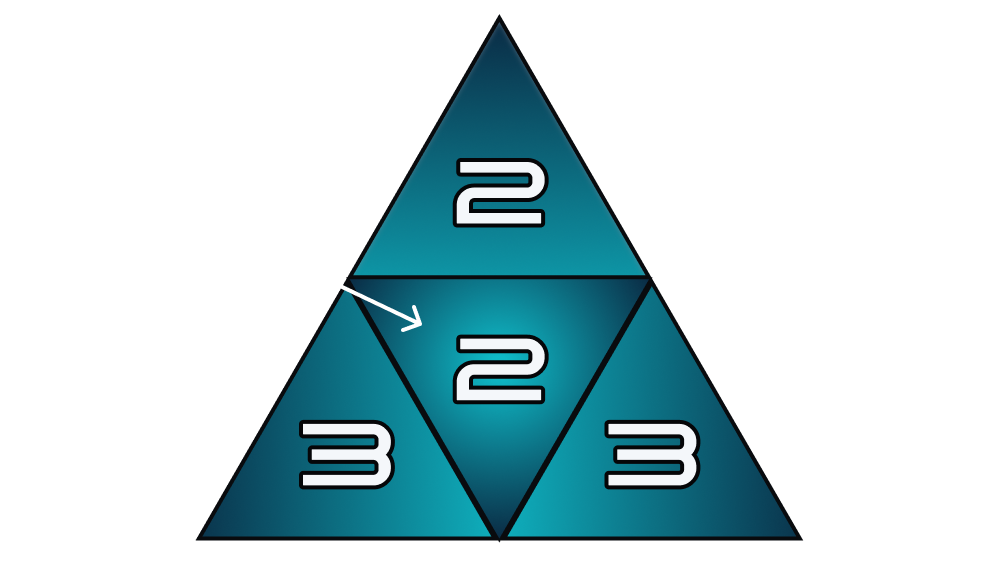
Attack power. When a Sentient attacks an unblocked target, ATK damage is dealt directly to your opponent's Capital. In combat, ATK is compared against the blocking Sentient's DEF.
Defense power. Determines how much ATK is needed to destroy a Sentient in combat. If ATK equals DEF, both Sentients are destroyed. If ATK is less than DEF, the attacker is destroyed and the defender survives.
LP generated per turn while the card is in the Staking Zone. This is the core driver of your economy. Higher Stake Value cards generate more LP but may cost more to mint — managing this trade-off is a key strategic decision.
LP required to move a card from the Wallet or Staking Zone into the Arena (Battlefront Zone). Paying Deploy Cost is the primary LP expenditure in the mid-to-late game. Cards with RAM can be deployed and act immediately — all others must wait one full turn before acting.
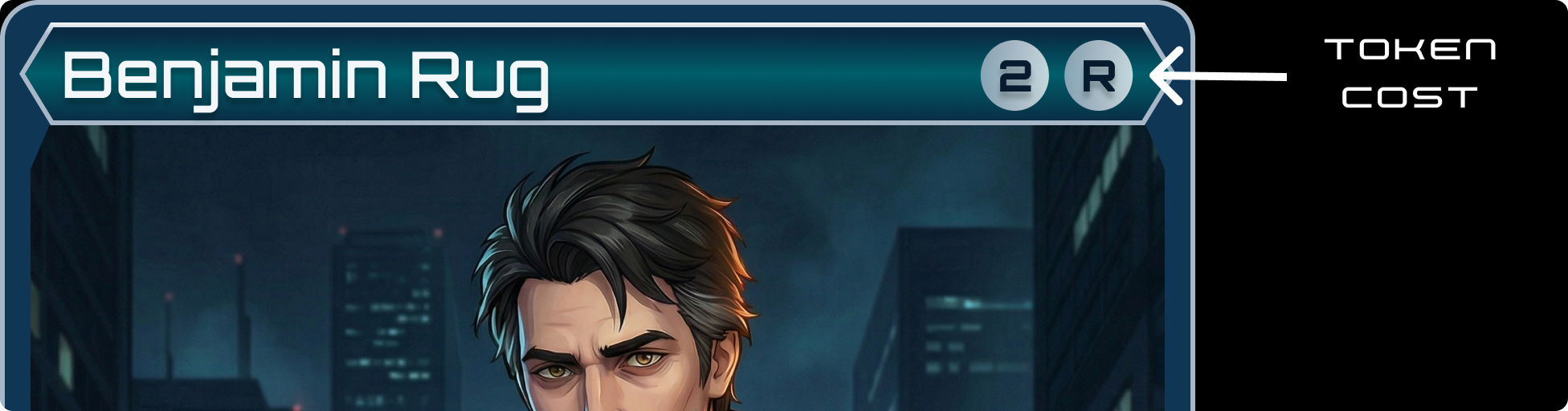
Number of Token Cards that must be in your Wallet Zone to mint an Action Card from your hand. Token Cost is paid by locking Tokens in your Wallet until your next turn. This creates a hard floor on how many Action Cards you can mint per turn.
LP & CAPITAL
Two resources define every game of Rug'd. Capital is what you're protecting. LP is what you're spending to protect it.
Your life total. Each player starts with 25 Capital. It decreases when unblocked Sentients attack you directly or through card effects. It can be recovered through LP exchange or card abilities — and can even exceed 25 through healing effects.
The action economy of Rug'd. LP is generated by cards in your Staking Zone each turn and carries over indefinitely — there is no cap. Almost every meaningful action costs LP: unlocking cards, bridging Tokens, deploying to the Arena, and activating abilities.
ZONE FLOW
Cards move between six zones throughout the game. Each transition has a cost and a consequence. Knowing when and how to move cards is what separates reactive players from proactive ones.
COMBAT & PRESSURE
Combat in Rug'd is about more than trading Sentients — it's about applying pressure to force your opponent into bad LP decisions. Every unblocked attack is Capital lost. Every block is a Sentient risked.
THE CATALYST LAYER
Catalysts are the tactical depth layer of Rug'd. Each one belongs to a Classification that defines its timing and role. Some respond to opponent plays, others accelerate your own. Knowing which Classifications your opponent might be holding is a constant information game.
Fast disruption. Cancel abilities, disable staked cards, lock attackers.
Reactive mimicry. Duplicate a Catalyst just played or mirror a stat buff.
Counter Catalysts. Cancel, reflect, or increase the cost of opponent effects.
Resource boosts. LP refunds, Token discounts, temporary staking buffs.
Tempo tools. Draw cards, bridge Tokens for less, cheat card minting.
Hard removal. Destroy or banish cards in any zone.
Movement enablers. Reposition cards between zones or reduce movement cost.
Zone invaders. Affect opponent's Generator, Wallet, or Staking Zone directly.
Information warfare. Peek at opponent's hand or top cards of their deck.